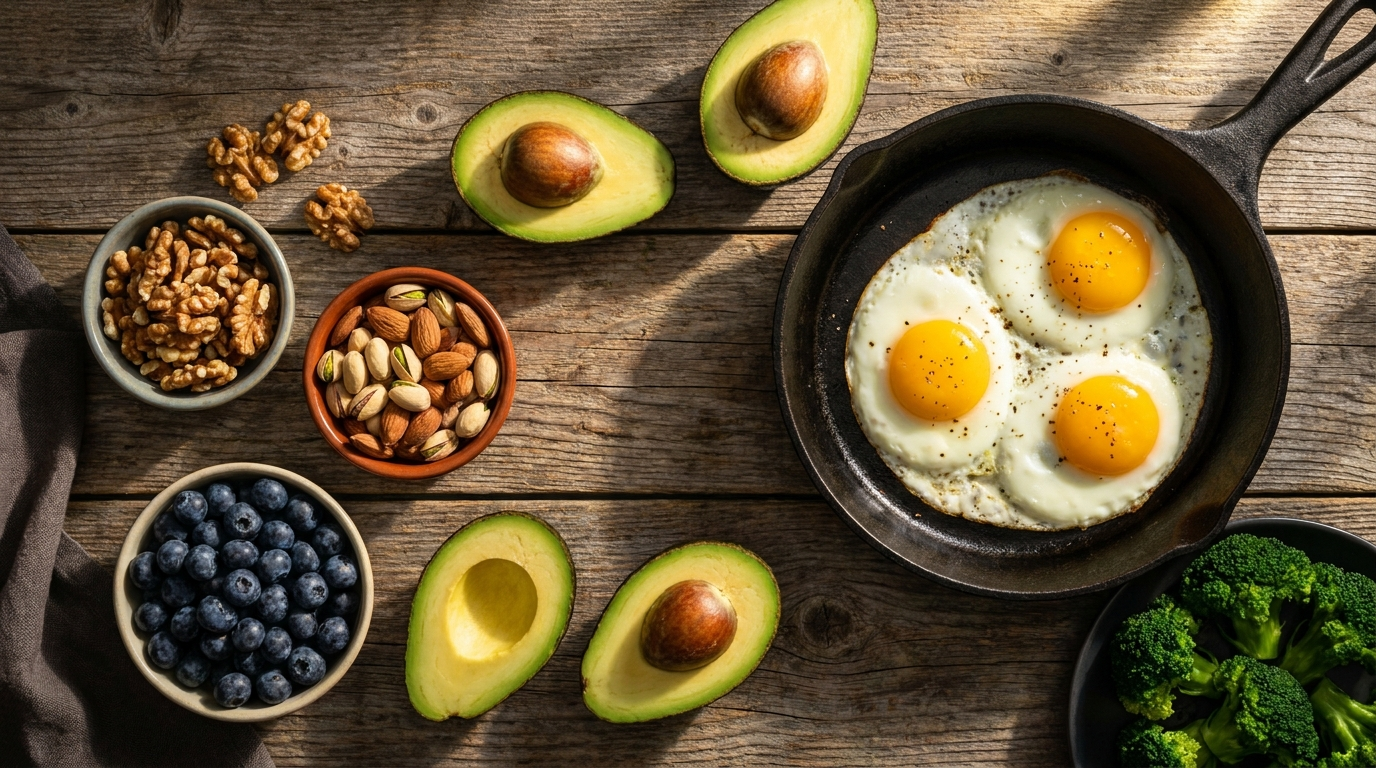
I did everything right. The salads, the water, the walking three times a week, the reduced portions, the cutting out of alcohol. And nothing moved. Not the scale, not how my clothes fit, not the stubborn layer around my midsection that I had been trying to address for the better part of two years. The missing piece had nothing to do with eating less. It had to do with blood sugar.
Why Blood Sugar and Weight Are Inseparable
Insulin is the primary fat storage hormone in the human body. When blood sugar is elevated, insulin rises to manage it. When insulin is elevated, the body’s ability to access stored fat for energy is suppressed. This is the mechanism that connects blood sugar and weight in a way that most standard dietary advice fails to address.
If you are eating in a way that keeps insulin elevated throughout the day — frequent meals, regular snacking, a diet high in refined carbohydrates even in modest amounts — your body is spending a significant portion of its time in fat storage mode rather than fat burning mode. Calorie restriction does not change this.
Insulin Resistance and Stubborn Weight

Insulin resistance creates a particularly difficult environment for weight loss. When cells are resistant to insulin, the pancreas compensates by producing more. Chronically elevated insulin drives fat storage and suppresses fat burning with particular intensity. The weight that accumulates in this state — often centered around the abdomen — is both a symptom of insulin resistance and a contributor to it.
People with insulin resistance often find that the diets that work for others — moderate calorie reduction, balanced macronutrients — produce little or no result for them. This is not a failure of willpower or consistency. It is a physiological reality that requires addressing the hormonal environment rather than simply the caloric equation.
What Changed When I Addressed Blood Sugar
Reducing refined carbohydrates was the first and most significant change. Not eliminating carbohydrates — replacing refined versions with whole food versions that digest more slowly and produce a lower insulin response. The difference in how my body responded was noticeable within three weeks.
Protein at every meal became a priority. Building meals around protein rather than around carbohydrates changed the hormonal response to eating in a way that created the conditions for fat burning that had been missing.
During this process, I added Sugar Defender 24 to my routine. I was specifically interested in its berberine and chromium components, both of which have research supporting their role in improving insulin sensitivity and supporting healthy glucose metabolism.
What Sustainable Progress Looks Like

The weight loss that followed addressing blood sugar was slower than I wanted and faster than anything I had experienced before while actually trying. The abdominal fat — the stubborn layer that had been unmovable — was the last to shift but eventually did.
If your diet efforts have repeatedly produced limited or no results, blood sugar and insulin deserve serious attention before you try another calorie-based approach. The question is not just how much you are eating. It is what your body is doing with it.
Also Recommended: Support Your Health Naturally
Many people looking to manage blood sugar also love the Medicinal Garden Kit — a collection of powerful healing plants you can grow at home for natural wellness support.
Keep Reading
👉 Best Foods to Control Blood Sugar: What I Eat Now (And What I Stopped)
👉 Morning Routines That Help Balance Blood Sugar: What I Do Before 8am