Foods that raise blood sugar are not always the ones you expect. I spent a long time believing I had a reasonable handle on what I was eating. I avoided candy. I skipped soda. I thought I was doing the right things. And then I started actually paying attention to how I felt after specific meals — and what I found was uncomfortable enough that I could not ignore it anymore.
Some of the foods that were spiking my blood sugar the hardest were foods I had been eating for years under the assumption that they were fine. Healthy, even. The gap between what we are told is good for us and what actually happens in our bloodstream after we eat it is wider than most people realize.
This is what I found — after paying close attention, making one change at a time, and being honest about the results.
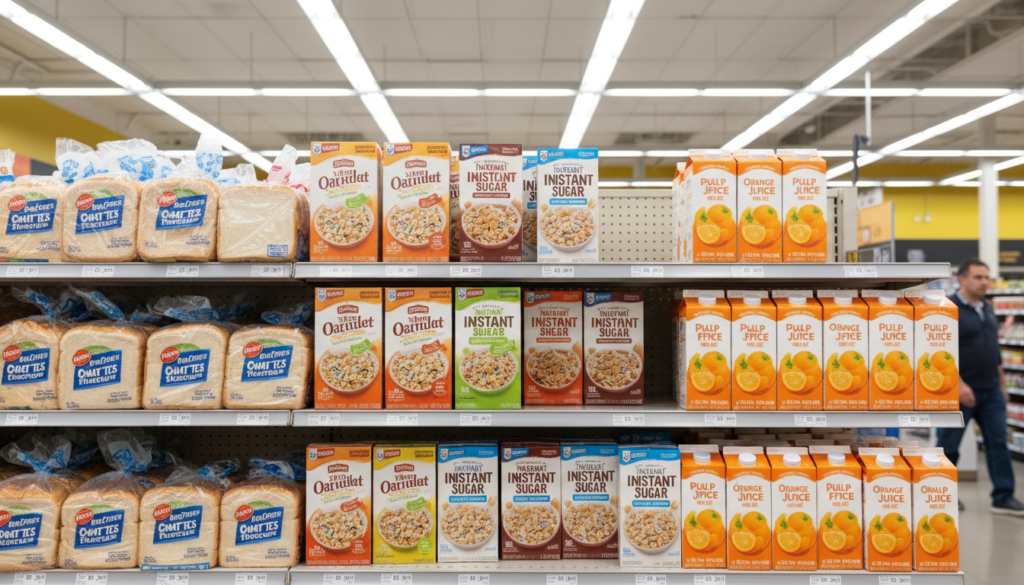
Why Some Foods Hit Harder Than Others
Not all carbohydrates are equal when it comes to how fast they raise blood sugar. The glycemic index gives a rough measure of this — how quickly a food causes glucose to rise in the bloodstream compared to pure glucose. But the glycemic index alone is incomplete. Glycemic load — which accounts for both the speed of the rise and the amount of carbohydrate in a realistic portion — is more useful in practice.
Processing changes everything. A food that starts as something relatively slow-digesting can be turned into something that spikes blood sugar dramatically just by changing how it is made. Whole oats versus instant oatmeal. Brown rice versus white rice. Whole wheat bread versus the soft sandwich loaf that technically says “whole grain” on the label. The processing removes fiber, breaks down the structure, and allows glucose to enter the bloodstream much faster.
Context matters too. The same food eaten alone versus eaten alongside protein and fat produces a very different blood sugar response. Fat and protein slow gastric emptying — the rate at which food leaves the stomach — which in turn slows glucose absorption. This is why the combination of what you eat matters as much as the individual foods that raise blood sugar on their own.
The Surprising Foods That Raise Blood Sugar Fast
White bread is the obvious one, and most people know it. But the extent to which it spikes blood sugar surprises even people who think they understand it. Two slices of standard white bread have a glycemic index comparable to eating pure sugar. The speed is nearly identical. I stopped eating white bread years ago, and I thought that was enough. It was not, because the substitute I reached for was almost as bad.
Whole wheat bread — the soft, packaged kind — is one of the most misleading foods that raise blood sugar. The fiber content is marginally higher than white bread, but the glycemic index is not dramatically different. The soft texture is the tell. If bread compresses easily when you squeeze it, its structure has been broken down enough that it will digest quickly. Actual dense whole grain bread with visible seeds and a chewy texture behaves differently. Soft “whole wheat” sandwich bread does not.
Instant oatmeal was the one that genuinely surprised me. Oats have a reputation as a blood-sugar-friendly food, and slow-cooked rolled oats largely deserve it. But instant oatmeal — the kind in packets, the kind that takes ninety seconds to make — is processed to the point where it behaves almost like a refined grain. Add the flavoring and sugar that most packets contain and you have something that spikes blood sugar nearly as fast as a candy bar. I tested this on myself over three mornings. The evidence was not subtle.
Fruit juice is another one that catches people off guard. A glass of orange juice contains roughly the same amount of sugar as a can of soda, with almost no fiber to slow absorption. The fiber in whole fruit is what makes fruit a moderate rather than extreme food when it comes to blood sugar impact. Remove the fiber by juicing and you remove that buffer entirely. The same applies to smoothies made predominantly from fruit without protein or fat added — they can spike blood sugar significantly despite feeling like a healthy choice.
Sports drinks and energy drinks are marketed as performance products, but most of them are essentially sugar water with added electrolytes or caffeine. Even the ones positioned as healthy alternatives often contain 25 to 40 grams of sugar per bottle. For anyone managing blood sugar, these are among the foods that raise blood sugar most rapidly — and because they are drinks, the absorption is even faster than solid food.
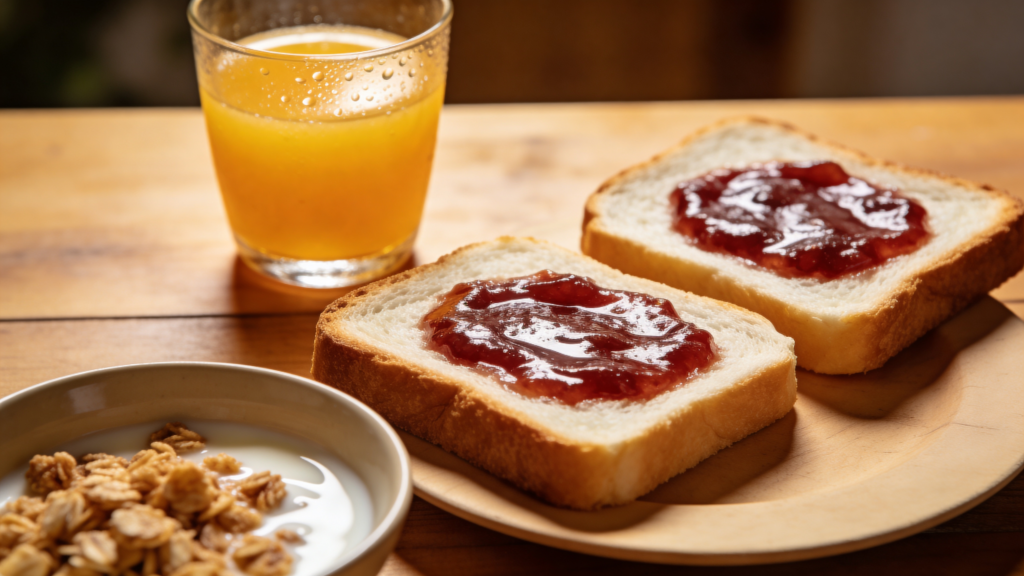
The “Healthy” Foods That Are Still a Problem
This is the category that took me the longest to come to terms with, because these are foods with genuinely good reputations — foods that have real nutritional value but still raise blood sugar more than people managing glucose should eat freely.
Bananas are the most common example. A ripe banana contains around 27 grams of carbohydrate and 14 grams of sugar. It has fiber and potassium and vitamins. But eaten alone, first thing in the morning, when insulin sensitivity is naturally lower, it produces a meaningful spike. As discussed in the piece on whether bananas are good for blood sugar, ripeness matters significantly — a green banana behaves differently than a very ripe one. But the ripe banana that most people eat is not a free food for blood sugar management.
White rice is one I had to let go of reluctantly. It is a staple food globally and has been for thousands of years. But white rice has a high glycemic index — higher than white bread in some measures — and a large portion at dinner was reliably followed by fatigue and blood sugar variability for me. Brown rice is meaningfully better. Smaller portions of white rice eaten with vegetables, protein, and fat are manageable. A large bowl of white rice as the center of a meal is among the foods that raise blood sugar most consistently.
Granola presents the same problem as instant oatmeal but with an even healthier reputation. Most commercial granola is clusters of oats bound together with honey or syrup, often with dried fruit added. The combination of refined carbohydrate, added sugar, and dried fruit — which is essentially concentrated sugar — makes it one of the more impactful foods that raise blood sugar despite appearing on the shelves of health food stores.
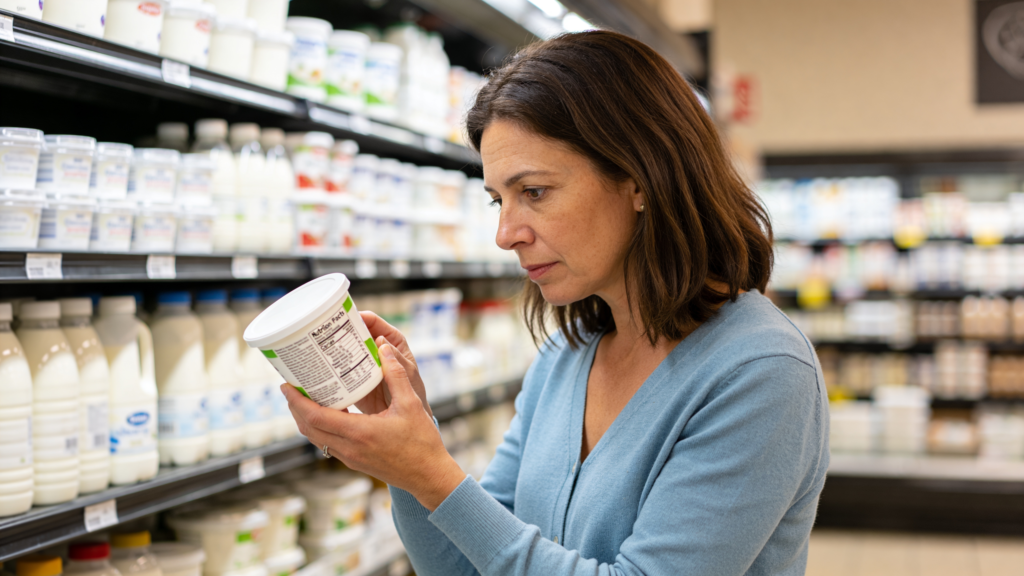
Low-fat flavored yogurt is something I have mentioned before and will keep mentioning because it keeps catching people. When manufacturers remove fat from yogurt, they add sugar to compensate for the lost flavor. A single serving of flavored low-fat yogurt can contain 20 to 30 grams of sugar. Plain full-fat Greek yogurt has a fraction of that and behaves very differently in the bloodstream. Same food category. Completely different impact.
The foods that raise blood sugar fastest are often the ones with the healthiest reputations. Reading labels changed everything for me.
Learn More About Sugar Defender 24 →
What I Changed and What Stayed
I did not eliminate every food on this list overnight. That approach never works for me — I have tried it, and the rigidity makes everything harder. What I did instead was reduce frequency and change context. I still eat rice occasionally, but in smaller amounts and always alongside protein and vegetables. I still eat fruit, but I reach for berries instead of bananas most of the time, and I always eat fruit with something else rather than alone.
The biggest single change was breakfast. Removing the instant oatmeal and fruit juice that had been my standard morning for years and replacing them with eggs, avocado, and sometimes plain Greek yogurt changed how I felt before noon more than any other single adjustment. The right breakfast choices for blood sugar turned out to matter more than I had expected — not because dinner or lunch are unimportant, but because morning insulin sensitivity is lowest and the morning meal sets the metabolic tone for several hours.
Reading labels became a habit. Not obsessively — I do not calculate grams at every meal. But I learned to look for total carbohydrate and added sugar on packaged foods, and I learned that the number on the label often tells a different story than the marketing on the front of the package. “Whole grain,” “natural,” “low fat” — none of these phrases tell you anything reliable about blood sugar impact.
The Supplement That Helped Fill the Gap
Changing what I ate addressed most of the problem. But I noticed that even on days when I ate well, I still had more variability than I wanted — particularly in the afternoon. I started looking at what the research supported for blood sugar metabolism beyond diet alone.
Something that genuinely helped me alongside the food changes was Sugar Defender 24. The ingredients — berberine, chromium, cinnamon extract — target the mechanisms that regulate how glucose is processed after eating. I was skeptical going in. After a few weeks of consistent use, the afternoon variability that had been a reliable feature of my days became less pronounced. Not eliminated, but meaningfully reduced.
It works alongside dietary changes, not instead of them. But for anyone who has made the food adjustments and still feels like something is missing — it is worth knowing about.
The Practical Version
If you take nothing else from this: the foods that raise blood sugar fastest are usually the ones that are most processed, most liquid, or most refined — regardless of what the packaging says about them. Soft bread, instant grains, fruit juice, flavored yogurt, sports drinks, white rice in large portions. These are not poison. But they are not neutral for someone whose blood sugar regulation is already working harder than it should.
The goal is not to eliminate everything. The goal is to understand which foods that raise blood sugar are worth limiting, and to eat them differently when you do — smaller amounts, alongside protein and fat, not on an empty stomach. That framework handles most situations without requiring perfect discipline or constant calculation.
Understanding the warning signs of high blood sugar alongside this list helps connect the dots between what you ate and how you feel two hours later. And if you are looking at the full picture of how to lower blood sugar naturally, food is the foundation — but it is rarely the complete answer on its own.
Also Recommended: Support Your Health Naturally
Many people looking to manage blood sugar also love the Medicinal Garden Kit — a collection of powerful healing plants you can grow at home for natural wellness support.