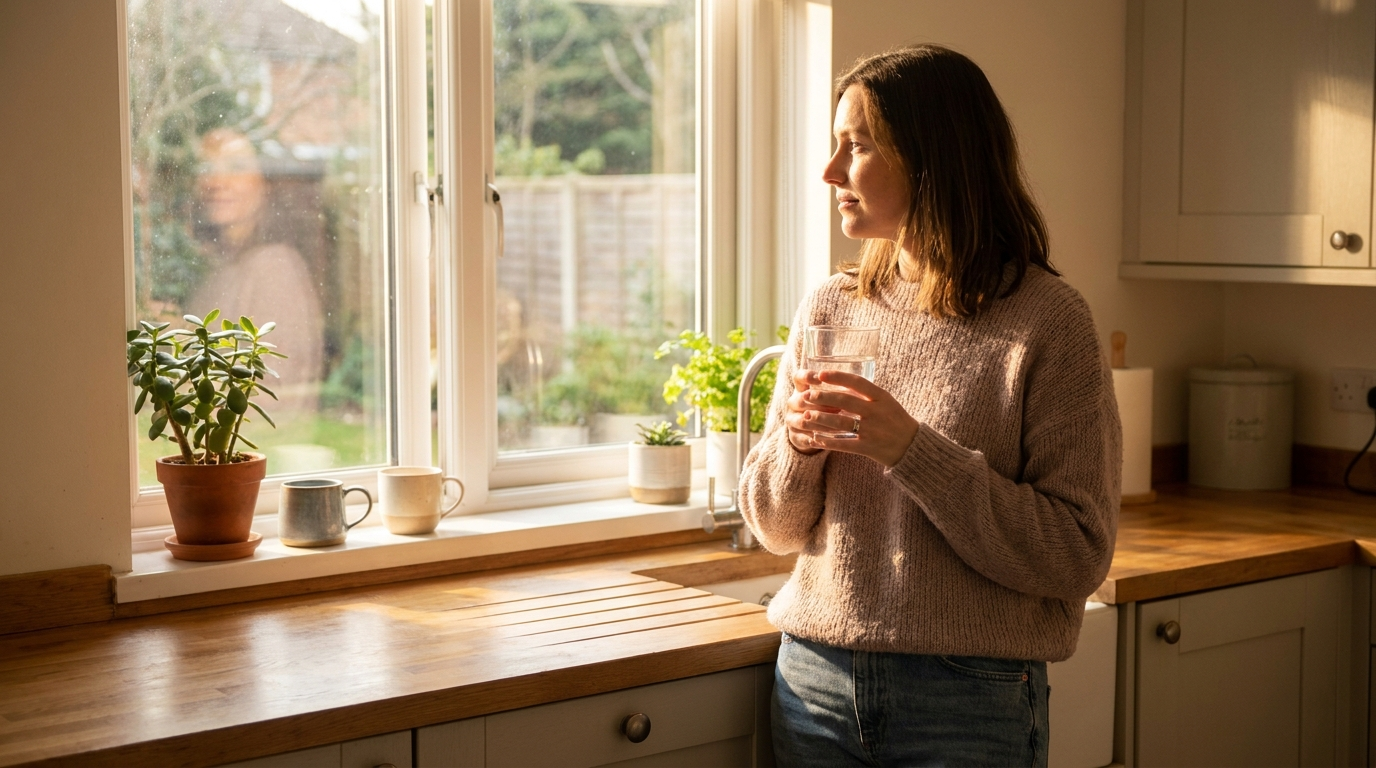
My mornings used to feel like a battle I was always slightly losing. I would wake up already behind, reach for coffee before anything else, eat whatever was fastest, and spend the first two hours of the day waiting to feel functional. When I started paying attention to blood sugar, I realized that almost everything about my morning routine was making it harder for my body to regulate glucose through the day. Changing the sequence of simple habits — before coffee, before food — changed everything.
Water Before Coffee
The first change was the most counterintuitive: delaying coffee until after I had drunk a large glass of water and eaten something with protein. Caffeine raises cortisol, and cortisol raises blood sugar. Drinking coffee on an empty stomach — particularly first thing in the morning when cortisol is already naturally elevated as part of the wake cycle — compounds this effect. The result is a blood sugar spike before you have eaten anything, followed by a crash that feels like the coffee wearing off but is actually a glucose response.
Water first does several things: it addresses the dehydration that accumulates overnight, it signals to the body that the day has started without immediately triggering the cortisol-glucose response, and it gives the gut something to work with before caffeine enters the picture. I noticed a difference in morning energy within the first week of making this change alone.
Movement Before Eating
Ten minutes of walking, stretching, or light movement before breakfast improves insulin sensitivity for the hours that follow. The mechanism involves activating muscle tissue, which increases its capacity to absorb glucose and respond to insulin signals. A short walk before eating breakfast produces a meaningfully different blood sugar response to that meal than eating breakfast immediately upon waking.

I started with five minutes, walking around the block while the kettle boiled. Then ten. Now it is a consistent fifteen to twenty minutes that I genuinely miss on days I skip it — not because of the exercise itself, but because the cognitive clarity of the morning is noticeably better when I do it versus when I do not.
This does not require a full workout or significant exertion. The effect comes from activating the muscles, not from cardiovascular intensity. Gentle movement is enough to produce the insulin sensitizing effect that makes the rest of the morning more stable.
Protein First at Breakfast
The research on this is consistent: a breakfast anchored in protein produces a different blood sugar trajectory through the morning than a carbohydrate-centered breakfast. Protein stimulates satiety hormones that carry through to lunch, reduces the post-breakfast glucose spike, and creates a more stable energy baseline than toast or cereal or most traditional breakfast foods.
My current default breakfast is two eggs, either scrambled or poached, with whatever vegetables I have available. Sometimes a small amount of whole grain toast alongside. Sometimes Greek yogurt instead on mornings when I want something lighter. The protein content is the constant — everything else varies.
What I stopped eating for breakfast is as relevant as what I started eating. Sweetened yogurt, flavored oatmeal packets, fruit juice, commercial granola, most smoothies as typically made — all of these produce blood sugar spikes that create the mid-morning crash I had been experiencing for years and accepting as normal.
Sunlight Exposure Within the First Hour
This was a finding I came across while researching circadian rhythm and metabolic health. Morning light exposure — particularly direct outdoor light within the first hour of waking — helps set the circadian clock, which directly influences cortisol patterns and, by extension, blood sugar regulation through the day. The timing of cortisol peaks is governed partly by light signals, and getting outdoor light early in the morning produces a more regulated cortisol pattern than staying indoors.
The walk I added as exercise also serves this function. On mornings when I walk outside in daylight, even on overcast days, my energy through the morning is more consistent than on mornings when I exercise indoors. The light exposure appears to be a meaningful variable independent of the movement.
Avoiding Screens for the First Twenty Minutes
This is the hardest one for most people, including me. The habit of checking the phone immediately upon waking activates the stress response before the body has had time to complete its natural morning cortisol cycle. The psychological stress of email, news, or social media first thing in the morning elevates cortisol and raises blood sugar before the day has properly started.
I put the phone across the room before sleeping. The first twenty minutes of my morning now happen without it. This sounds minor. The effect on cortisol and blood sugar patterns through the morning is not minor — it is one of the changes that had a measurable effect on my fasting glucose numbers when I was tracking closely.
The Supplement I Added to the Morning Routine
I take Sugar Defender 24 with breakfast as part of my morning routine. The consistency of taking it with food, at the same time each day, seemed to produce more reliable results than taking it inconsistently. The chromium component specifically supports carbohydrate metabolism, which I wanted addressed at the start of the day when I am eating my first carbohydrates.
What the Morning Sets Up for the Rest of the Day

The morning matters disproportionately because it sets the metabolic tone for the hours that follow. A morning with stable blood sugar — achieved through movement, protein, hydration, and managed cortisol — makes every subsequent food decision easier. The afternoon cravings are milder. The energy dips are shallower. The concentration through the workday is more sustained.
None of the individual elements I have described here is dramatic or difficult. The sequence matters as much as the individual choices. Water, movement, protein, light, no screens — in roughly that order, before 8am. That is the routine. It took about three weeks to feel automatic and about six weeks to feel like something I did not want to skip.
Also Recommended: Support Your Health Naturally
Many people looking to manage blood sugar also love the Medicinal Garden Kit — a collection of powerful healing plants you can grow at home for natural wellness support.
Keep Reading
👉 How to Lower Blood Sugar Naturally: What Finally Worked for Me
👉 Best Foods to Control Blood Sugar: What I Eat Now (And What I Stopped)
👉 The Connection Between Sleep and Blood Sugar: What I Wish I Had Known